
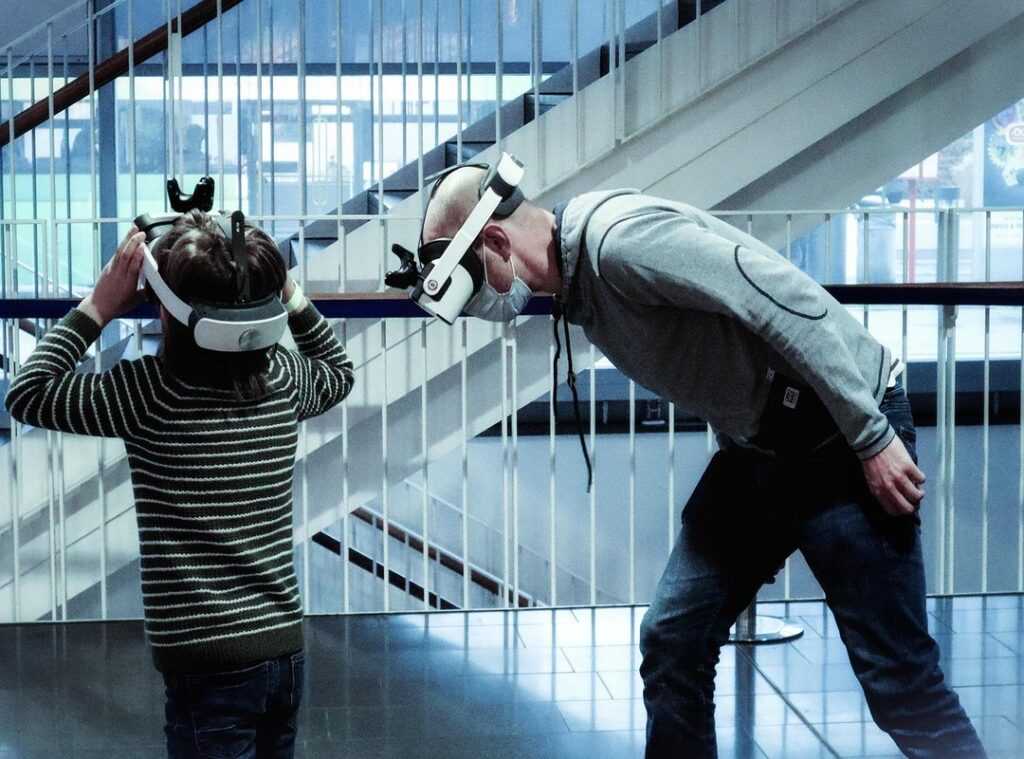
Ever lost track of time while exploring a game world? It’s like stepping into another universe. That’s the magic of virtual reality gaming.
But let’s be honest. “Immersion” is thrown around so much, it’s almost lost its meaning. What truly makes a game transport you elsewhere?
I’ve spent years dissecting game design and tech to separate mere entertainment from genuine experiences. This isn’t just about flashy graphics or cool gadgets. It’s about the layers (sensory) feedback, psychological hooks, modern tech.
That fuse together to create reality-bending moments.
Trust me, this isn’t fluff. I promise you, by the end of this article, you’ll understand the anatomy of immersive gaming. We’ll break down the elements that truly matter.
Ready to decode what makes a game more than just a game?
Beyond the Buzzword: The Three Pillars of Digital Presence
Immersion isn’t just a techy term in virtual reality gaming. It’s about presence: feeling like you’re actually inside a game’s world. Developers break this down into three types of immersion, each with its own magic.
Let’s start with Spatial Immersion. This is what pulls you into the physical space of the game, making you feel like you’re really there. Think about world design and how it interacts with you.
Take ‘Elden Ring’, for example. The game’s massive scale and smooth exploration have you wandering through its landscapes for hours. It’s not just about what you see, but how you interact with the environment.
Every corner turned or space conquered adds to that sense of being part of something bigger.
Then there’s Narrative Immersion. It’s that emotional hook that keeps us tied to the characters and their stories. ‘The Last of Us’ does this brilliantly. You get so wrapped up in the character dynamics and their struggles that you might find yourself genuinely caring about their fates.
It’s storytelling at its finest, drawing you in deeper with each plot twist.
Finally, we have Strategic/Mechanical Immersion. This is all about getting into the zone (the) flow state. Where your mind syncs up with the game’s mechanics. ‘Valorant’ exemplifies this with its fast-paced, strategic gameplay.
The rapid decision-making and tactical depth make every match a heart-pounding experience.
Curious how this compares to the rise of mobile esports 2023? You can find more takeaways here. It’s fascinating how gaming evolves, isn’t it?
The Sensory Arsenal: Forging Worlds with Light and Sound
Audio. Honestly, it’s the unsung hero of immersion. Way more solid than graphics, if you ask me.
A changing musical score reacts to gameplay, adapting to every heartbeat moment. Ever notice how your pulse picks up with the tempo during a tense scene? That’s not a coincidence.
It’s magic. Well, the kind of magic that’s coded meticulously.
Take sound effects. They play a key role in shaping your experience. The satisfying thunk of an axe?
That’s the stuff that makes you feel alive in the game. Or the distinct crunch of footsteps on gravel. It’s all about those little details.
Even the crackle of a nearby fire adds warmth, danger, tension.
Spatial audio changes everything. It’s a game-changer for tactical awareness. Feel the threat creeping up behind you?
You owe thanks to 3D audio. Games like ‘Hellblade: Senua’s Sacrifice’ and ‘Hunt: Showdown’ nail this. They make space feel alive, breathing, and yes, palpably dangerous.
So let’s talk visuals. Sure, photorealism is cool, but it’s not the end-all. A strong, cohesive art style does wonders.
Look at ‘Hades’ with its lively aesthetic. It sucks you in not with realism but with style. Or ‘Bloodborne’s’ oppressive atmosphere (it’s) unforgettable.
It’s not about copying reality but creating a new one.
And don’t even get me started on UI. A minimal or diegetic interface? Keeps you in the world without breaking the spell.
Honestly, if you’re into true immersion, this stuff’s key. The right blend of audio and visuals can make any world come alive. And in virtual reality gaming, these elements take on a whole new level of importance.
It’s All in Your Head: Psychological Hooks of Deep Immersion
Let’s talk about player agency. It’s not just about making choices; it’s about feeling those choices matter. When you play a branching RPG, every decision seems like it could change the world.

A strictly linear shooter, though? You’re just along for the ride. Don’t get me wrong, linear games can be fun, but they lack that immersive depth.
A believable world isn’t about hyper-realism. It’s about consistent rules. Ever noticed how NPCs react to your actions in a good RPG?
That’s what makes the world feel alive. It’s not just a set of pretty graphics. It’s like when you’re watching a movie, and suddenly you’re aware of the actor’s accent.
Breaks the spell, right?
Then there’s the flow state. That sweet spot where your skill perfectly matches the challenge. You lose track of time.
Single-player games nail it when you finally conquer that boss after hours of trying. Multiplayer games? That perfect team plan you pull off with friends.
It’s a rush.
And the psychological hooks? They’re everywhere. Virtual reality gaming takes this to another level.
You’re not just playing; you’re there. It’s why blockchain changing game development is so interesting. It’s about creating worlds that feel real, not just look real.
So, do you feel like a participant or just a visitor? That’s the question. Immersion isn’t just a buzzword.
It’s what keeps us coming back, diving deeper into these virtual worlds. It’s an escape, a challenge, and sometimes, a revelation. Isn’t that why we play?
The Tech Frontier: Gear That Blurs the Line Between Game
Virtual reality gaming is the pinnacle of immersive tech. When you slip on a VR headset and dive into a game like ‘Half-Life: Alyx,’ you’re not just playing. You’re living it.
The game world feels real. You reach out (literally) to interact with objects around you. It’s as if the lines between the virtual and the real world have vanished.
This is what true presence in a game feels like.
But immersion isn’t just about visuals. Haptic feedback has evolved beyond the simple rumble of an old-school controller. Take the PS5’s DualSense controller.
It’s a game-changer. You don’t just hear the rain; you feel it. The tension of a bowstring, the recoil of a weapon (all) simulated in your hands.
And let’s not forget about display technology. A high-refresh-rate panel makes everything smoother. Combine that with an ultrawide monitor, and your peripheral vision gets a workout.
It’s like the controller is alive, responding to every action with remarkable precision.
You might even forget you’re looking at a screen. Do you see how these elements come together to create a smooth experience?
, this gear amplifies the core principles of great game design. It doesn’t replace them. Hardware like this enhances the sensory and psychological elements that make gaming an art form.
It’s about enhancing, not overshadowing. Technology should serve the game, not the other way around. the magic happens. And honestly, isn’t that what gaming is all about?
Dive into the World of True Immersion
You’ve cracked the code. True immersion in gaming isn’t just about flashy features. It’s a blend of art, psychology, and technology.
Now, armed with this insight, you’re no longer a passive consumer. You’re a connoisseur of virtual reality gaming. No more falling for marketing fluff.
You know what makes a game truly captivating.
So, what will you seek out next? A game that delivers an unforgettable experience, or a headset that truly transports you? Start your journey with confidence.
Explore games that promise depth and excitement. Your next adventure is just a choice away. Dive in and experience the magic.