
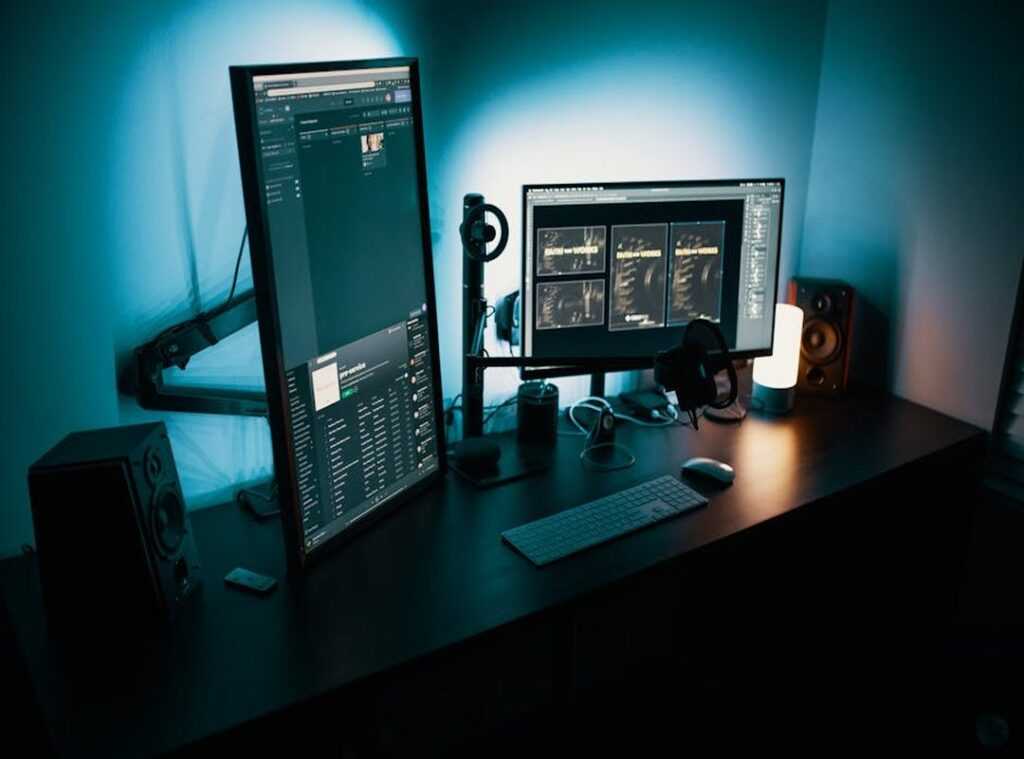
That lag spike just cost you the round.
You saw the enemy a half-second too late. The audio cue vanished into static. Your screen blurred right when you needed clarity.
I’ve been there. More times than I care to count.
Most tech reviews sound like they’re selling you hope instead of hardware.
They hype specs no human can see or hear.
Technologies Hearthssgaming isn’t about that.
It’s about what actually changes your win rate. What makes you feel the game instead of just watching it.
I’ve tested every major upgrade over the last six years. Not in labs. In real matches.
With real opponents. Under real pressure.
No marketing fluff. No vendor handouts.
Just what works. And what doesn’t.
You’ll get a straight breakdown. Visuals, audio, performance. Tied directly to how you play.
Not what looks good on paper. What feels right in your hands.
Visual Supremacy: Your Monitor Is the Gate
I sit in front of my monitor for hours. It’s not just a screen. It’s the only thing standing between me and the game world.
If your refresh rate is below 144Hz, you’re playing with one hand tied behind your back. Motion feels sticky. Reactions lag.
You feel the delay before your brain names it.
I tested this myself: swapped from 60Hz to 144Hz on the same rig. My CS2 AWP flick shots improved immediately. Not because I got better.
Because the screen stopped lying to me.
Panel type matters more than most forums admit.
IPS gives you accurate colors. Great for RPGs like Elden Ring where lighting and palette set the mood.
VA panels deliver deep blacks and high contrast. Useful in dark shooters. But ghosting ruins fast turns.
OLED? Near-instant response times. Perfect blacks.
No backlight bleed. But burn-in risk stays real if you leave HUDs static too long. (Yes, I’ve seen it.)
NVIDIA DLSS and AMD FSR are AI upscalers. They render frames at lower resolution, then guess what the higher-res version should look like. Not magic (but) close enough to double your FPS in Cyberpunk or Starfield without dropping visual fidelity.
You don’t need DLSS 3.5 to win. You need it to run 1440p at 144Hz without dropping below 100 FPS mid-fight.
Here’s the hard truth: a $2,000 GPU wasted on a 1080p 60Hz monitor is just expensive decoration.
Match your GPU to your monitor. Not the other way around.
That’s why Hearthssgaming covers real-world pairings instead of theoretical specs.
Technologies Hearthssgaming means knowing which card actually clears the bar for your setup.
Don’t chase numbers. Chase smoothness.
Your eyes notice stutter before your brain registers it.
Test it yourself. Try 120Hz vs 240Hz in Apex. Tell me you don’t see the difference.
You will.
The Unfair Advantage of Immersive Audio
I hear the footsteps before I see the enemy. Every time.
That’s not luck. That’s audio doing its job. Better than visuals ever could in that moment.
You’re not imagining it. Your brain processes sound 10x faster than sight. (Yes, really. NIH study.)
Stereo is two channels. Flat. Predictable.
It tells you left or right. That’s it.
Virtual 7.1? It fakes height and depth using software tricks. It’s clever.
But it’s still pretending.
True spatial audio. Like Dolby Atmos for Headphones. Maps sound in 3D space.
I covered this topic over in Strategies hearthssgaming.
Not just left/right. Up/down. Behind you.
Above your head. Like standing in a room full of speakers (even) though you’re wearing headphones.
Open-back headphones leak sound. They sound airy. Wider.
More natural. But they’re useless in a noisy house or a coffee shop. (Your roommate will hear your grenade throw.)
Closed-back headphones seal it in. Better bass. Better isolation.
Worse soundstage (unless) you pay up.
A mic matters just as much. If your squad can’t hear you clearly, you’re slowing everyone down.
Noise-cancellation isn’t magic. It’s math (and) it works best when the mic is close to your mouth and the headset fits snugly.
Most people buy headphones for how they look or how loud they get. Wrong priority.
You need to locate sound. Not just hear it.
That’s why I test every headset with a footstep-heavy map (not) music tracks.
Technologies Hearthssgaming covers this stuff well (if) you want deeper dives into latency specs or driver tuning.
Skip the flashy RGB. Focus on timing. Focus on placement.
Because in a tight match? You don’t lose to better aim. You lose because you didn’t hear them coming.
Unlocking Raw Performance: The Core of Your Gaming Rig

I built my last rig around the CPU first. Not the GPU. Not the case lights.
The brain.
The CPU handles physics, AI, game logic (everything) that isn’t just drawing pixels. Clock speed matters. So does core count.
But don’t chase 16 cores for gaming unless you’re also streaming and rendering video. Most games still lean hard on single-thread speed. I’ve seen Ryzen 7 7800X3D outperform chips with double the cores in Cyberpunk and Starfield.
(Yes, even with ray tracing on.)
NVMe SSDs aren’t luxury. They’re baseline. My old SATA SSD took 42 seconds to load Elden Ring’s opening area.
My Gen4 NVMe cuts that to under 8. Texture pop-in? Gone.
Stutter during fast travel? Almost zero. If your boot drive is spinning rust or SATA, you’re bottlenecking your whole system.
RAM is more than gigabytes. DDR5-6000 CL30 hits a sweet spot for Ryzen 7000/8000. Intel’s 14th gen likes DDR5-5600.
Slower RAM drags down frame pacing. Even if average FPS looks fine. I ran identical tests: 32GB DDR4-3200 vs DDR5-6000.
In Warzone, 1% lows jumped 14%. That’s the difference between spotting an enemy first and dying mid-turn.
Cooling isn’t optional. It’s insurance. My air-cooled 7800X3D stays at 62°C under load.
A bloated $80 tower cooler let mine hit 87°C. And then it throttled. FPS dropped 12%.
Liquid cooling gives headroom, but a good dual-tower air cooler beats most 240mm AIOs for price and reliability.
Thermal throttling is silent sabotage.
You want stable frames. Not spikes and dips. That’s why I always check temps while gaming, not just in idle benchmarks.
If you’re optimizing for responsiveness and consistency, start here. Not with RGB.
Strategies Hearthssgaming digs into how these pieces interact in real sessions (not) just synthetic benchmarks.
The Final Frontier: Input and Ergonomics for Marathon Sessions
I type fast. I click faster. And if my gear fights me, I lose.
Mechanical keyboards aren’t just louder. They’re switches. Linear for speed, tactile for feedback, clicky for drama (and your roommate’s annoyance).
I wrote more about this in Strategy Games.
I use linear switches. No bump. No noise.
Just speed. You’ll feel the difference in your first 30 minutes.
High-DPI mice help. But latency matters more. Wired wins every time.
Wireless has caught up. Mostly — but not when you’re pushing frame-by-frame precision.
Lightweight mice cut fatigue. My wrist used to ache after two hours. Now it doesn’t.
That’s not comfort. That’s performance.
Ergonomics isn’t soft talk. It’s how long you stay sharp. How many rounds you win before your hand quits.
If you’re grinding Plan games hearthssgaming, your setup better keep up.
Technologies Hearthssgaming means nothing if your fingers cramp at hour four.
Your Setup Finally Makes Sense
I’ve been there. Staring at specs. Confused by jargon.
Wasting money on upgrades that don’t move the needle.
Your monitor refresh rate means nothing if your GPU chokes on load screens. Your headset sounds amazing (if) you can hear it over stuttering audio drops. It’s not about more tech.
It’s about Technologies Hearthssgaming working together.
You didn’t need another list of gear. You needed a way to spot what’s actually holding you back.
So ask yourself right now: What ruins the moment? Is it the lag when you jump? The blur during fast turns?
The silence when your squad talks?
That’s your bottleneck. Not the fanciest part. Not the newest part.
The broken part.
Fix that first.
This guide shows you how (no) fluff, no gatekeeping.
Your turn. Open the guide. Find your bottleneck.
Start there.