
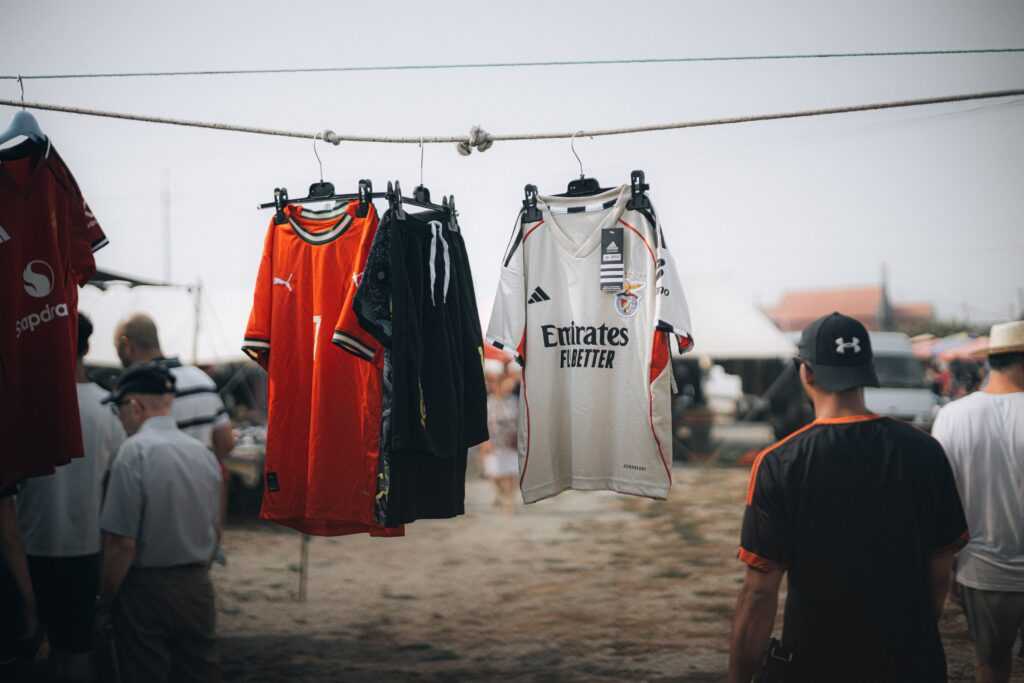
Walk into any major esports event today and one thing is impossible to miss. The teams look like teams. Coordinated jerseys. Bold colors. Logos placed with intention. Sponsor patches arranged the way you would see them on a professional football kit. Competitive gaming has quietly adopted the full visual language of traditional sports, and the custom jersey sits right at the center of it.
This did not happen by accident. As esports matured from basement tournaments into a global industry with arenas, broadcast deals, and franchised leagues, the organizations behind it looked at how traditional sports built identity and recognition. They saw decades of refined practice in football, basketball, and beyond, and they borrowed the parts that worked. The custom jersey was one of the first things they took. Understanding why that happened, and how the system actually works, is genuinely useful for anyone running a gaming team, a collegiate esports program, or even a serious amateur squad.
The Jersey Is Identity Infrastructure
In traditional football, the jersey is not an afterthought. It is identity infrastructure. It is how fans recognize a team from across a stadium or through a television screen. It is how players signal that they belong to something. It is a canvas for sponsors, a piece of merchandise, and a generational symbol all at once.
Esports figured out that every one of those functions applies to competitive gaming too. A coordinated jersey makes a five player roster read as a real organization instead of five individuals who happened to queue together. It gives the broadcast something clean and recognizable to frame. It gives sponsors a placement that travels everywhere the team goes, on stage, in content, across social media. And it gives fans something to buy and wear.
The lesson traditional football taught, and esports absorbed, is simple. The jersey is not decoration. It is part of the operation.
What Football Got Right That Gaming Adopted
A few specific practices crossed over directly from the football world into esports apparel.
The first is the home and away concept of visual consistency. Football programs maintain a coherent design language across every piece they wear. Esports orgs picked this up, building jersey systems where the competition jersey, the travel wear, and the content day apparel all share the same identity.
The second is durability standards. Football jerseys take a beating and still need to look sharp on camera. The custom apparel industry that serves football developed manufacturing methods, especially full sublimation, that hold up under heavy use without cracking or fading. Esports orgs benefit from that exact same manufacturing maturity, because a competitive gaming jersey also lives under stage lights and on camera for hours.
The third is the sponsor integration model. Football refined how to place multiple sponsor logos on a single garment without it looking cluttered. Esports, which is heavily sponsor driven, adopted that placement logic almost wholesale.
The fourth is the no nonsense ordering pipeline. Football programs, especially at the youth and school level, need reliable turnaround, flexible order sizes, and predictable pricing. The custom manufacturers who serve them built systems around that. Esports teams, which also range from tiny amateur squads to large organizations, plug into the same systems.
Where Hamcospo Fits Into This
This is where it helps to look at an actual manufacturer that serves both worlds. Hamcospo, run by Hamco Sports Inc., is a United States based custom team apparel company, and it is a good example of how the football jersey pipeline and the esports jersey pipeline are really the same pipeline.
Hamcospo builds custom football uniforms, and it also runs a full esports apparel line, both through the same process and the same quality standard. Every design is fully sublimated, meaning the colors, logos, and sponsor marks are dyed directly into the fabric instead of pressed on top, so nothing cracks or peels under stage lighting or repeated wear. The fabric is performance polyester built for comfort under heat, which matters whether you are on a football field or under broadcast lights for a long series. Pricing is flat with no per color or per element upcharges, so a complex multi sponsor design does not get penalized. There are no minimum orders on most products, which is exactly what a five player esports roster needs. Free digital mockups arrive within twelve hours, revisions are unlimited and free, and designs are saved on file for easy reordering.
If you want to see how the football side of that operation is structured, you can browse the custom football uniforms collection, which covers full button jerseys, pullover styles, compression cuts, and complete team packages. For teams that want the coordinated jersey and pants combination at one flat price, this custom football jerseys collection bundles both pieces in matching designs. The full catalog, including the esports apparel line that runs through the same system, lives at for anyone who wants to see how one manufacturer handles both traditional sports and competitive gaming uniforms.
The takeaway for a gaming audience is this. When you order esports jerseys, you are not using a separate, lesser pipeline. You are using the same mature custom apparel manufacturing world that has served football programs for decades. That is a good thing. It means the quality standards, the turnaround reliability, and the design support were all battle tested long before esports showed up.
What Gaming Teams Should Borrow Next
Esports has adopted the jersey. There are a few more practices from the traditional sports playbook worth borrowing.
One is treating apparel as a system rather than a one off purchase. Football programs plan their full kit, then maintain it across seasons with consistent identity and periodic refreshes. Esports orgs that think the same way build stronger, more recognizable brands than orgs that reorder randomly with a new look every few months.
Another is documenting the brand. Football programs lock in their exact colors, logo files, and design standards so every order stays consistent. Gaming orgs should do the same, especially as rosters and staff turn over.
A third is involving the players. The strongest team identities, in football and in gaming, come from rosters that feel ownership over the look they compete in.
And a fourth is planning around the calendar. Football programs order ahead of the season. Esports teams should order ahead of major events and broadcast appearances rather than scrambling, because rushed orders limit options.
Why This Crossover Matters
Esports is not a niche anymore. According to data from the Entertainment Software Association, a large and growing share of the population plays video games, and competitive gaming has built real infrastructure around that audience. At the same time, traditional sports participation remains massive. The National Federation of State High School Associations consistently ranks football among the most played varsity sports in the country. These two worlds are not separate. They increasingly share fans, share business models, and as this article has covered, share the exact same custom apparel manufacturing pipeline.
For anyone building a competitive gaming organization, that is genuinely good news. The jersey playbook you need was written decades ago by traditional sports, refined over countless seasons, and it is fully available to you now.
Conclusion
Esports borrowed the custom jersey from traditional football because the jersey works. It builds identity, anchors recognition, carries sponsors, and turns a roster into a real organization. The manufacturing world that makes it possible, the same world that has produced custom football jerseys for generations, is mature, reliable, and fully open to gaming teams. Working with a manufacturer like Hamcospo, which runs football uniforms and esports apparel through one proven system, means a competitive gaming team gets the same quality and the same support that traditional programs have relied on for years. The smartest move for any gaming org is simple. Stop treating team apparel like an afterthought, and start treating it the way football always has, as part of the operation.